
Tag: June 2022
-
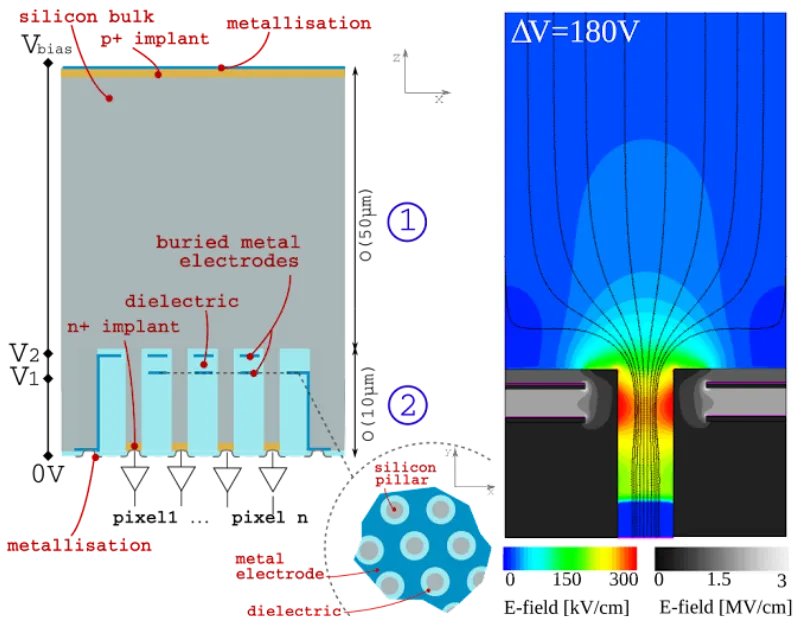
The Silicon Electron Multiplier, a new approach to charge multiplication in solid state detectors
By Victor Coco (CERN), project spokesperson. Edited by Rickard Stroem (DESY). The inner trackers in the next generation of hadron colliders experiments will be facing extremely high particle occupancies and radiation levels. To achieve good tracking performances in those conditions, their sensors will have to exhibit a single hit spatial resolution well below 10 μm…
-
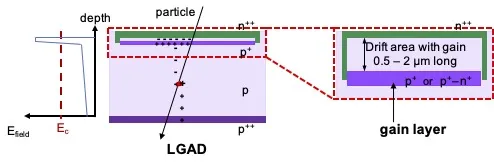
Thin Silicon Sensors for Extreme Fluences
By Valentina Sola (TO-INFN), project spokesperson. Edited by Rickard Stroem (DESY). Today’s silicon detectors are able to operate efficiently in environments with fluences up to 1016 particles per square centimetre. AIDAinnova’s recently awarded Blue Sky project “Thin Silicon Sensors for Extreme Fluences” aims to overcome this limit by the design of a novel doping layer…
-
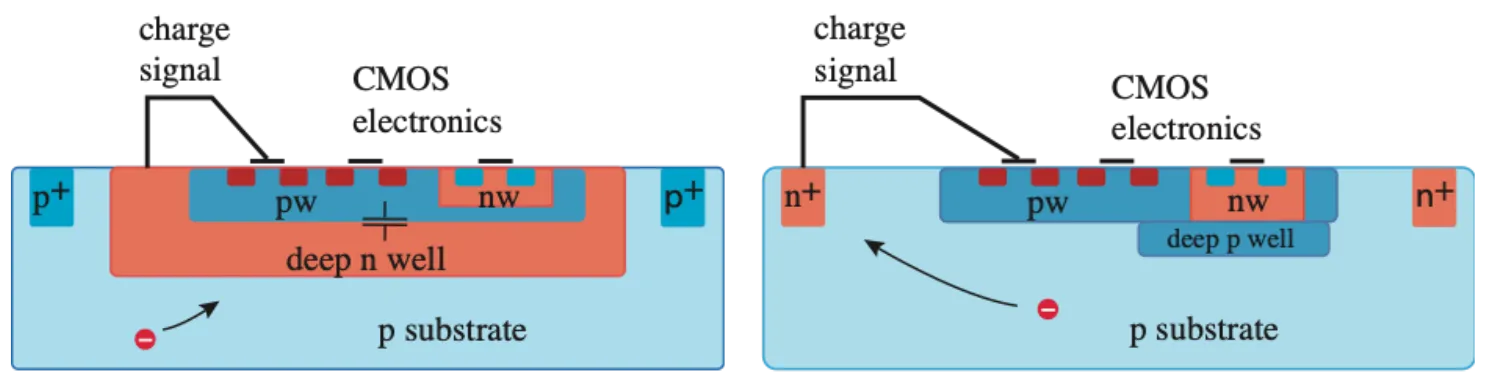
Let’s meet… WP5 and innovation in DMAPS
Let’s meet… WP5 and innovation in DMAPS By Norbert Wermes (U. Bonn) Under the coordination of WP5, the development of DMAPS will allow for more cost-effective and radiation-resistant pixel detectors. The large hadron collider experiments ATLAS and CMS will run at highest luminosity and require upgrades of their most exposed silicon pixel detectors. AIDAinnova develops…
-
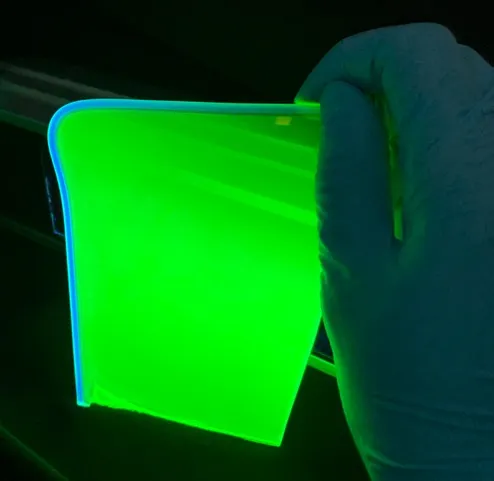
Paving the way for a new generation of fine-sampling calorimeters using nanocomposite scintillating materials
By Matthew Moulson (LNF-INFN), project spokesperson. Edited by Rickard Stroem (DESY) High-performance electromagnetic calorimeters often make use of inorganic crystal scintillators. Their high density makes them well suited for the construction of large homogeneous detectors where the scintillating material simultaneously serves as both absorber and active detector medium. An appropriate choice of inorganic crystal can…
-
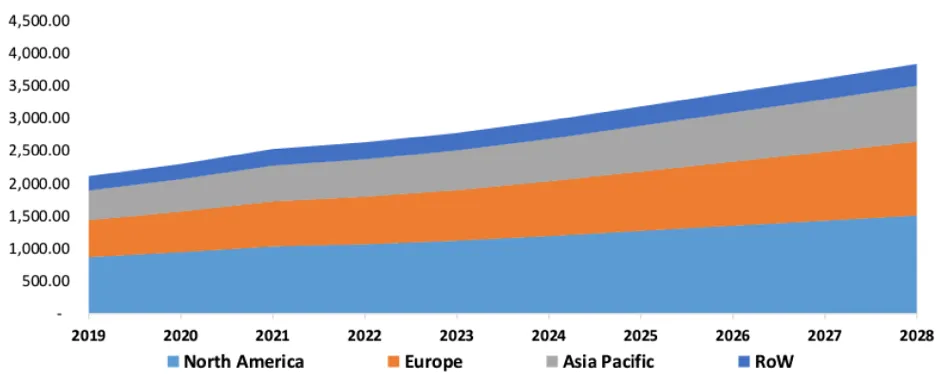
Innovation trends call for European technological excellence in particle detectors
By Antoine Le Gall (CERN) An analysis of market-innovation trends of particle detectors stresses the decline in innovation growth of Europe in comparison to China. The quest for discoveries in particle physics continuously drives available or emerging technologies beyond their limits, and the almost industrial scale at which this happens is one of the roots…
-
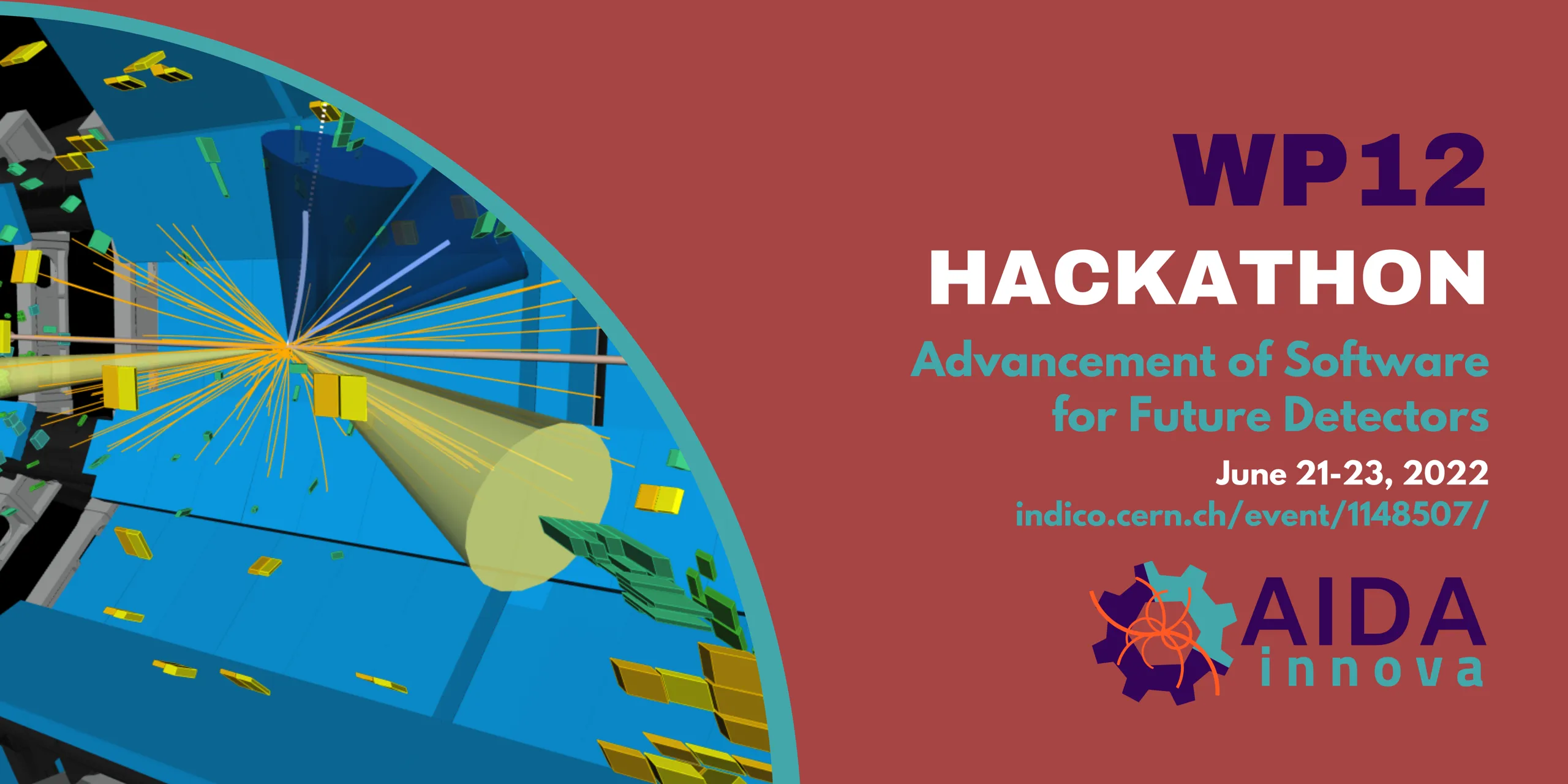
Upcoming hackathon for the advancement of software for future detectors!
The Software for Future Detectors work package (WP12) has invited all of its AIDAinnova developers to a hackathon at CERN, June 21-23. “We want to work on improving the integration of all of our tasks into the Key4hep stack, which allows our software to be made available in an off-the-shelf format,” says Graeme Stewart, coordinator…